
Cactus Paint Co.
A Denton painting company that already had a brand worth showing off, and nowhere to show it. We shaped the message, built the website that puts the work on display, and wired up what happens after someone asks for an estimate.
- Client
- CactusPaintCo.com
- Scope
- Messaging · Multi-page website · Lead capture · Follow-up tools · Launch
- Timeline
- A handful of meetings, start to live
- Role
- The website and everything behind the estimate button
The challenge
Painting is a category people shop with their guard up. Nearly every homeowner has a story — the crew that didn’t come back after the deposit, the quote scrawled on the back of a card, the tape line that wandered, the driveway with overspray on it. So the search doesn’t start with “who is best.” It starts with “who can I trust in my house for a week.”
Cactus Paint Co. is exactly who you’d want. Locally owned, family-run, and led by an owner whose whole approach comes down to integrity, honor, and excellence — the kind of person who does the prep nobody will ever see because doing it right is the point. They also arrived with something most local trades never get around to: a genuinely beautiful brand. The cactus mark, the cream and deep green, the confident type. It was already done, and it was already good.
What was missing was anywhere for any of that to land. A brand that only exists on a truck door and a yard sign is a brand nobody meets until after they’ve already decided who to call. Meanwhile the competition is a page of search results where every single listing promises quality workmanship and free estimates, in the same words, with no photos worth looking at.
That’s the actual problem, and it isn’t a design problem. Character doesn’t show up on a website by accident. If the thing that sets a company apart is how its owner treats people and how carefully the work gets done, a site has to be built deliberately to make that visible — because “we care about quality” is what everyone types, including the outfits that don’t.
The approach
Build on the brand, don’t redecorate it
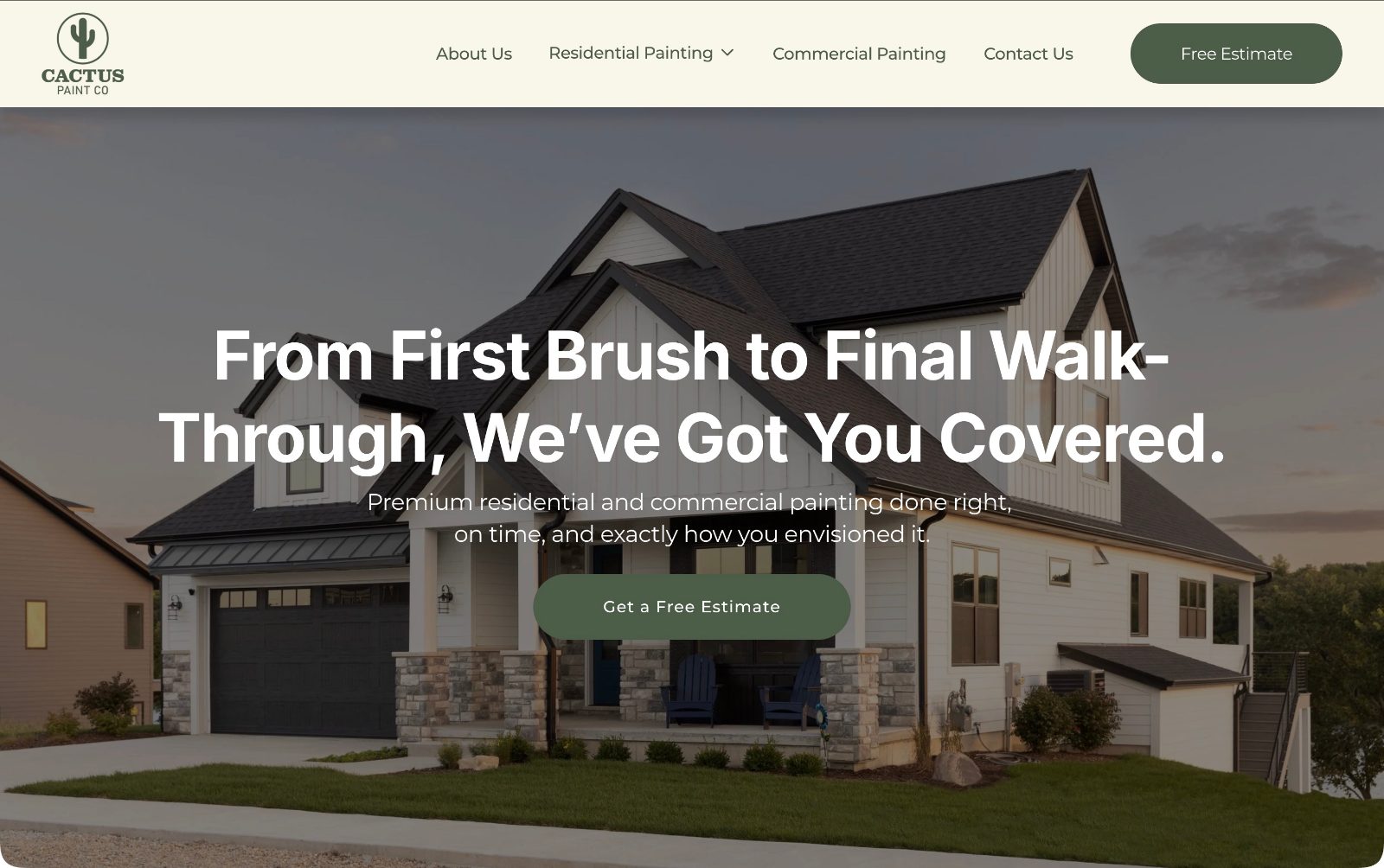
When a client shows up with an identity this good, the job is restraint. We didn’t bring a look to the project — we took the one they had and extended it into a medium it had never lived in. The cream and the deep green set the whole page. The cactus mark gets room to breathe instead of being shrunk into a corner. Type, buttons, spacing, and the way a section breathes all come out of the system that already existed, so the site doesn’t feel like a template wearing their logo. It feels like the brand, at full size, for the first time.
A message that says the standard out loud
Then the words, because the words are where trust is won or lost. We worked the message with them until it spoke to the homeowner’s real worry rather than the company’s résumé: from first brush to final walk-through, we’ve got you covered — a promise about the whole job, including the end of it, which is precisely where the bad stories come from.
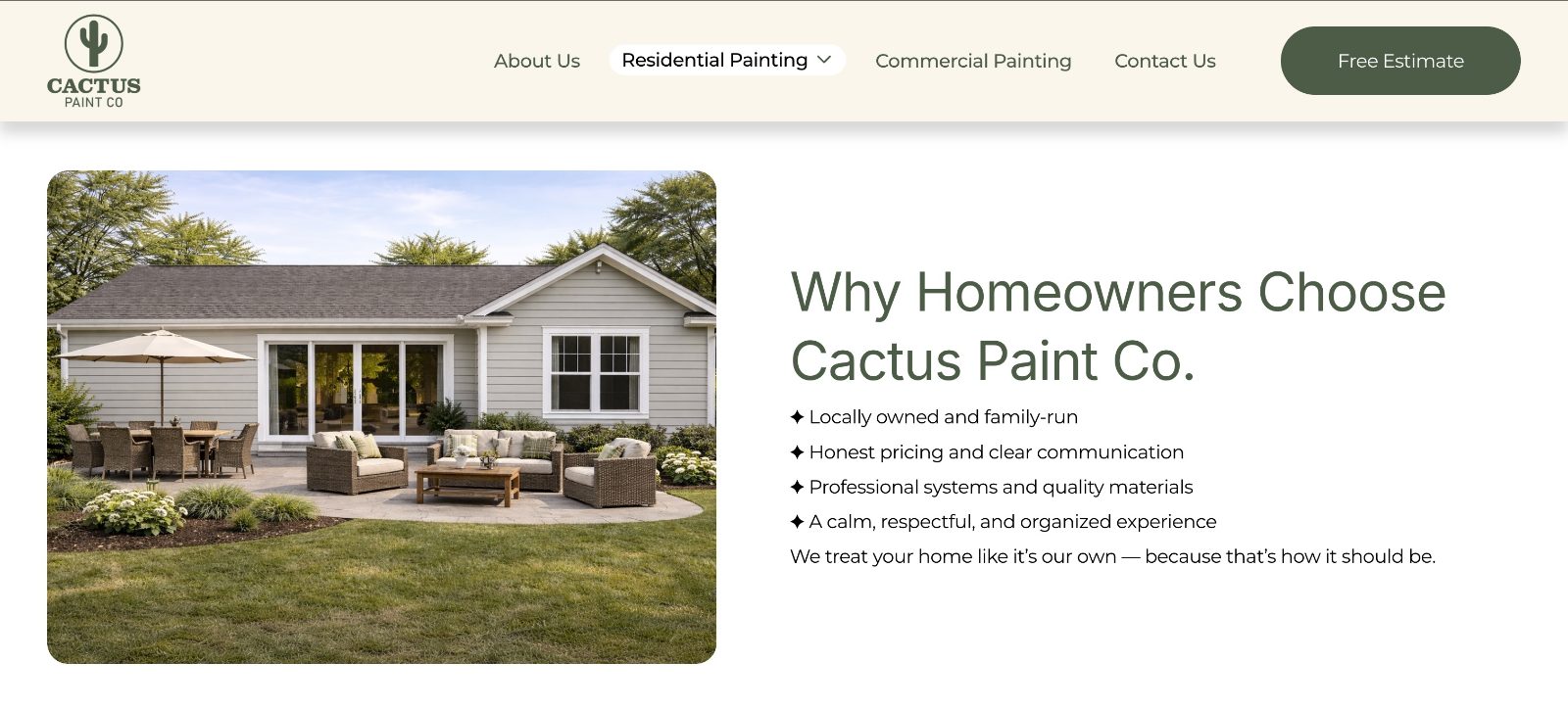
Underneath it, the reasons to choose them are written as specifics a reader can check rather than adjectives they’ve seen a hundred times: locally owned and family-run, honest pricing and clear communication, professional systems and quality materials, and a calm, respectful, organized experience. Then the line that sums up the standard the owner actually holds — we treat your home like it’s our own. Every one of those is a claim someone can hold them to, which is the only kind worth putting on a website.
Let the work carry the argument
Painting is bought with the eyes. Nobody reads three paragraphs about surface preparation and then calls; they see a house that looks the way they want their house to look, and then they read. So the site is built visually first — full-bleed photography, generous scale, real projects rather than stock swatches, and copy that sits inside the imagery instead of pushing it down the page. The whole experience is meant to feel like the finished job: clean lines, nothing cluttered, everything squared up.
Pages that match the way people actually search
A single-page site is fine for a business with one thing to sell. This isn’t one. Homeowners looking for interior work and property managers looking for a commercial crew are different people with different questions, and someone searching for exterior painting in Denton should land on a page about exterior painting — not a homepage paragraph that mentions it.
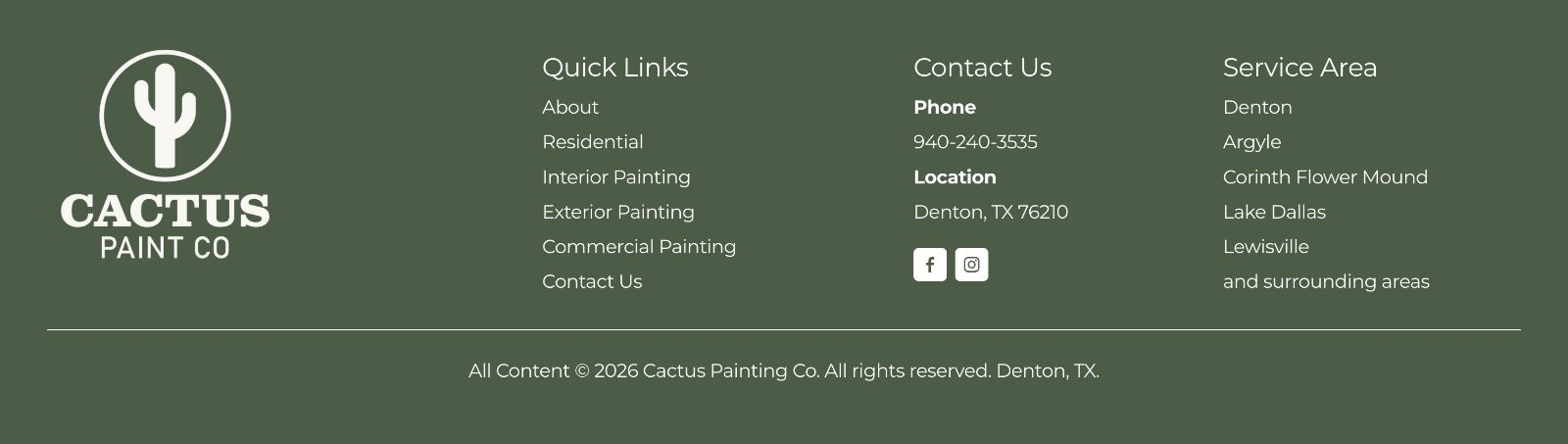
So the site is properly multi-page: residential split into interior and exterior, commercial on its own footing, a real About page, and a contact page built to get an estimate booked. The service area is stated plainly in the footer — Denton, Argyle, Corinth, Flower Mound, Lake Dallas, Lewisville and the surrounding areas — because “do you even come out here?” is the question that quietly ends a lot of visits.
The About page does the heaviest lifting
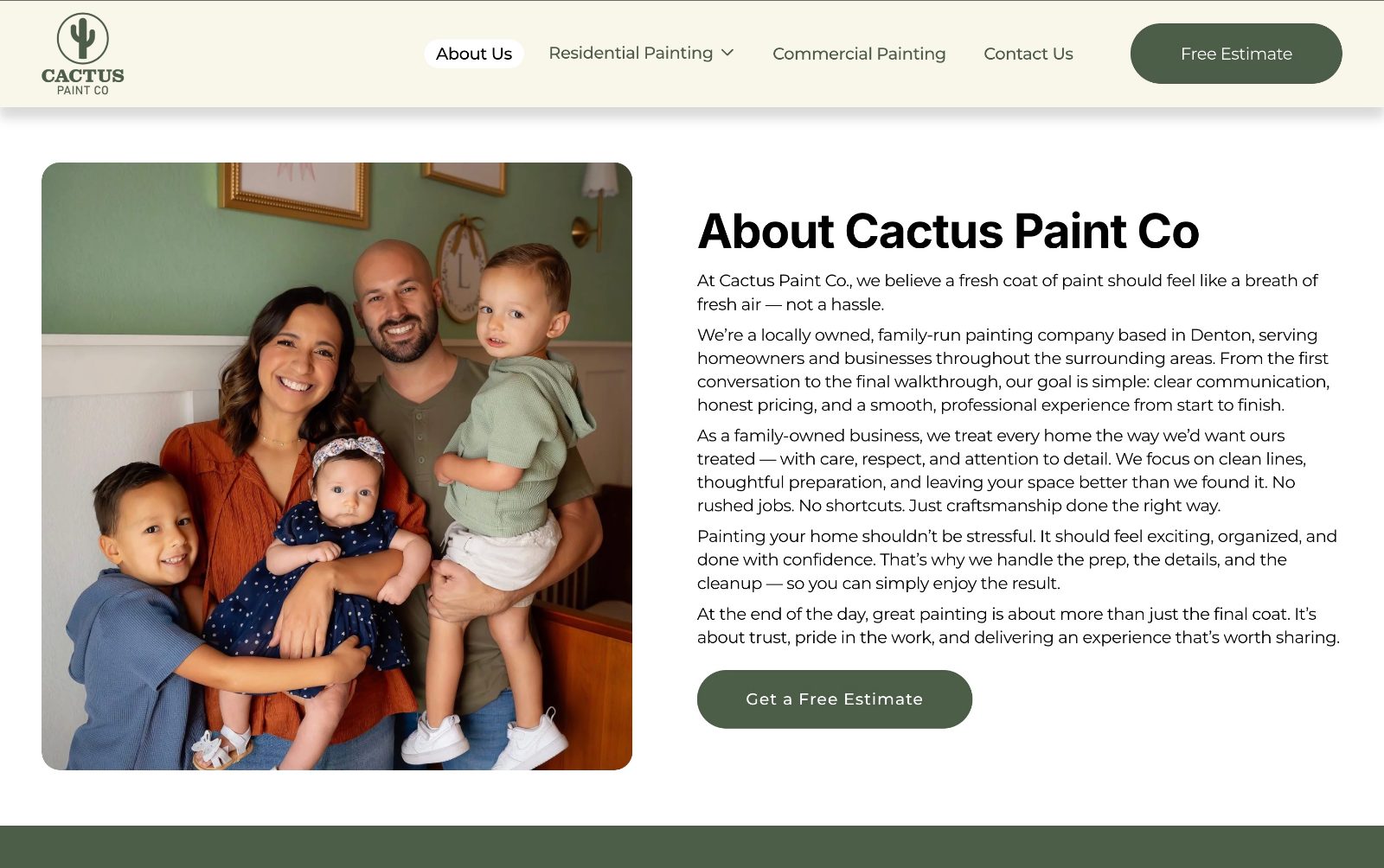
On most sites About is a formality. On this one it’s a closing argument. It leads with the family — the actual people, actual faces, the ones who will be standing in your entryway — and then says the quiet part in plain words: no rushed jobs, no shortcuts, craftsmanship done the right way, and a space left better than we found it.
That page exists because of a conviction the owner holds and we agreed with: the character behind the work is the product. Our job was to make sure nobody has to meet them in person to find that out.
One obvious next step, everywhere
A visitor should never have to hunt for how to start. “Free Estimate” sits in the nav on every page, the hero ends in it, and each major section closes with the same single ask instead of a scattering of competing links. One offer, low stakes, repeated at every point where someone might be convinced — because the moment a person decides is unpredictable, and the button has to be there when it happens.
What happens after the button
This is the part most small-business websites skip, and it’s the part that turns a website into revenue. A form that dumps into an inbox is a lead-losing machine: in the trades, the company that answers first usually wins the job, and a request that comes in at eight on a Friday night can go cold before Monday.
So we integrated the site with the tools their team uses to run the business — the estimate request lands where it can be worked, acknowledged, and followed up on, instead of sitting in an inbox next to receipts. Inquiries become scheduled estimates, and nothing falls through the crack between “someone asked” and “someone called them back.”
Off the ground in a handful of meetings
Start to launched took a few conversations. Not because anything got skipped, but because the client came prepared, the brand was already settled, and we design and build in the same room instead of passing files between three vendors.
That pace matters more for a local business than for anyone else. Every week without a site is a week of prospects finding somebody else, of referrals with nowhere to go and look, and of a great crew being invisible to the exact neighborhood they’re already working in.
What the client said
“Working with Trip was one of the best decisions we made for Cactus Paint Co. He took the time to understand our vision, communicated clearly throughout the process, and delivered a website we’re genuinely proud of. If you’re looking for someone who cares about both great design and a great client experience, I couldn’t recommend him more.”
The outcome
Cactus Paint Co. has a website that finally matches the work and the people behind it. The brand that was sitting on a truck door now runs the whole experience. The message names the standard instead of gesturing at it. The projects are on display where a homeowner can see them in the first three seconds, the services are split the way people actually search, and every page ends with the same easy next step — feeding a follow-up process that treats a new inquiry like the opportunity it is.
The part we care most about is subtler. A visitor who has never met this family can now tell, in about a minute, that these are careful people who will do the prep nobody sees. That was true before the site existed. It just wasn’t reaching anybody.
Which is most of why we love working with small local businesses. The gap is rarely the craftsmanship — it’s that the craftsmanship is invisible to everyone who hasn’t hired them yet. Closing that gap is a few weeks of work and it changes what a company can charge, who calls, and how fast it grows. Cactus was a joy to build for, and they were off the ground faster than most people expect is possible.
Great work nobody can find yet?
If you run a local business doing better work than your website shows — or you don’t have one at all — that’s the gap we like closing, and we’re quick about it.
Start Your Journey